
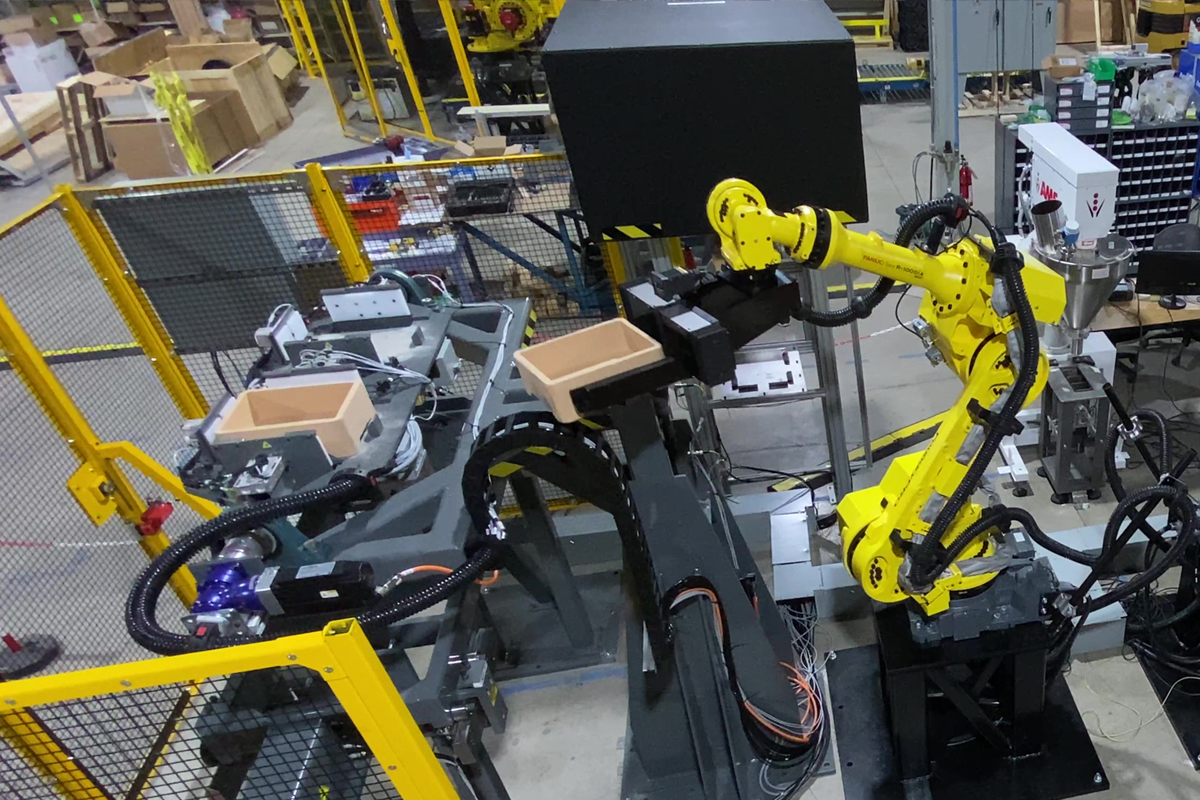
Overview
MJ Engineering has partnered with world-leading kiln manufacturers to design and implement fully automated sagger handling systems for both roller kiln and tunnel kiln applications. These systems were developed to replace labor-intensive, ergonomically challenging manual handling processes while increasing throughput, improving product reliability, and extending sagger service life.
The client’s primary challenge was managing high daily sagger volumes while reducing operator fatigue, minimizing unplanned downtime, and preventing product loss caused by damaged or compromised saggers entering the firing process.
Our Solution
MJ Engineering delivered turnkey robotic sagger handling systems tailored to each customer’s kiln configuration, production targets, and material handling requirements. Solutions include both single-robot and dual-robot system architectures, capable of processing from 1,500 to well over 2,000 saggers per day.
Each system is engineered to automatically perform the full sagger handling cycle, including unloading saggers from kiln cars, dumping and scraping contents, inspecting structural integrity, refilling saggers, and reloading them onto kiln cars. The systems accommodate sagger stacks with lids and support automatic changeover or removal of damaged saggers without operator intervention.
Robotic inspection routines detect cracks, chips, and other structural defects before saggers are reintroduced into the process, reducing the risk of in-process failures. All systems are fully integrated with existing or new kiln installations and designed to scale with future production demands.
Outcome
Automating sagger loading and unloading delivered measurable operational improvements across multiple installations. Operator safety was significantly improved by eliminating repetitive lifting and twisting throughout the shift. Gentle, consistent robotic handling increased overall sagger lifespan and reduced replacement costs.
By identifying and removing damaged saggers before failure, the systems reduced unplanned downtime and minimized product loss caused by sagger breakage during firing. The result was higher kiln uptime, improved process reliability, and increased daily throughput without adding labor.